


Beyond the Ink: Tattoo Removal Simulator Brings Tattoo Removal into the World of Gaming
Tattoo culture has appeared in video games in many forms, but the independent title Tattoo Removal Simulator approaches the subject from an unusual perspective. Instead of asking players to create new body art, the game places them inside a small studio dedicated to removing tattoos that clients no longer wish to keep.

Developed and published by Uraga, Tattoo Removal Simulator was released on Steam for Windows on June 1, 2026. The single-player simulation combines tattoo removal procedures with elements of studio management and character-driven storytelling. The game also supports virtual reality through OpenXR, with Meta Quest 2 and Meta Quest 3 listed among the compatible headsets.
More Than a Technical Procedure
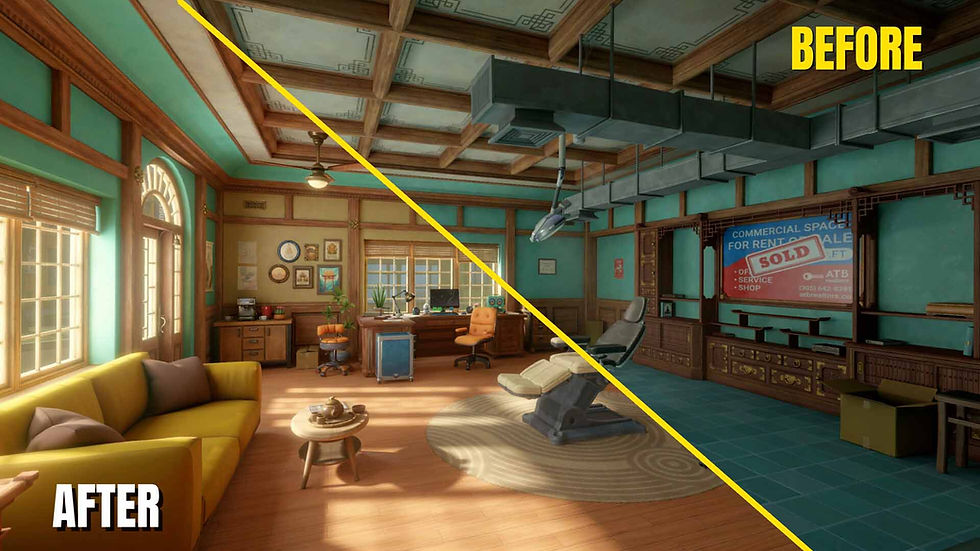
The gameplay centers on gradually fading tattoo designs using laser-inspired equipment. Players work carefully across the tattoo while balancing precision, efficiency, and client satisfaction. As the business grows, new equipment and studio upgrades become available, expanding the range of tools and customization options.

Rather than treating tattoo removal as a simple technical task, the game places equal emphasis on the people behind each procedure. Clients arrive with different motivations for removing their tattoos—moving on from past relationships, correcting old decisions, or simply starting a new chapter in life. In this way, tattoos become part of a personal narrative rather than just artwork on the skin.
The game features three primary modes. Career Mode focuses on building and managing a tattoo removal studio, Casual Mode offers a more relaxed experience without significant penalties, and Story Mode places greater emphasis on the personal backgrounds of individual clients.
Entertainment Rather Than Professional Training
For professionals working in permanent makeup, tattooing, or laser removal, it is important to recognize that Tattoo Removal Simulator is designed as entertainment rather than as a medical or educational simulation.
Its treatment mechanics are intentionally simplified, and the equipment presented in the game should not be interpreted as an accurate representation of modern laser technologies or clinical practice. Real-world tattoo and permanent makeup removal involves detailed knowledge of laser physics, skin biology, pigment behavior, treatment planning, contraindications, and healing—subjects that naturally extend far beyond the scope of a video game.

Why Tattoo Removal Simulator Matters to the Tattoo and PMU Industries
Although the gameplay is fictional, the project is noteworthy because it places tattoo removal at the center of its concept. As tattooing and permanent makeup continue to evolve, removal and correction procedures have become an increasingly important part of professional practice. Whether preparing for a cover-up, correcting previous work, or helping clients move beyond unwanted pigment, removal services now play a significant role within the broader industry.
The game also reflects an important reality: tattoo removal is rarely just about removing pigment. Behind every procedure is a personal decision, whether driven by aesthetic preferences, lifestyle changes, professional requirements, or simply the desire for a fresh start. By building its narrative around these individual stories, the game highlights a human aspect of tattoo removal that is often overlooked.
Editorial Perspective
At PULSE PMU, we welcome projects that introduce wider audiences to professions connected with permanent makeup, tattooing, and aesthetic restoration. While Tattoo Removal Simulator should not be viewed as a representation of real clinical practice, it demonstrates that tattoo removal has become recognizable enough to inspire an entire simulation game.
As the public becomes increasingly interested in tattoo culture and pigment correction, projects like this contribute to broader awareness of a profession that continues to grow alongside the global tattoo and permanent makeup industries. Even in a fictional setting, they remind players that behind every tattoo removal procedure is not only technology, but also a personal story.
Editorial Note: The screenshots featured in this article were sourced from the official Steam Store page and are used exclusively for editorial and informational purposes in connection with news coverage. PULSE PMU is an independent publication and has no affiliation with the developer or publisher. All trademarks, screenshots, and intellectual property remain the property of their respective owners.
#TattooRemovalSimulator #TattooRemoval #LaserTattooRemoval #Tattoo #PermanentMakeup #PMU #Micropigmentation #TattooIndustry #PMUNews #SimulationGame #SteamGame #Gaming #PULSEPMU
Publication date: July 15, 2026
By Sergey Yakovlev


Comments