


Permanent Makeup in Poland: Legal Requirements, Licensing and Professional Standards for PMU Artists
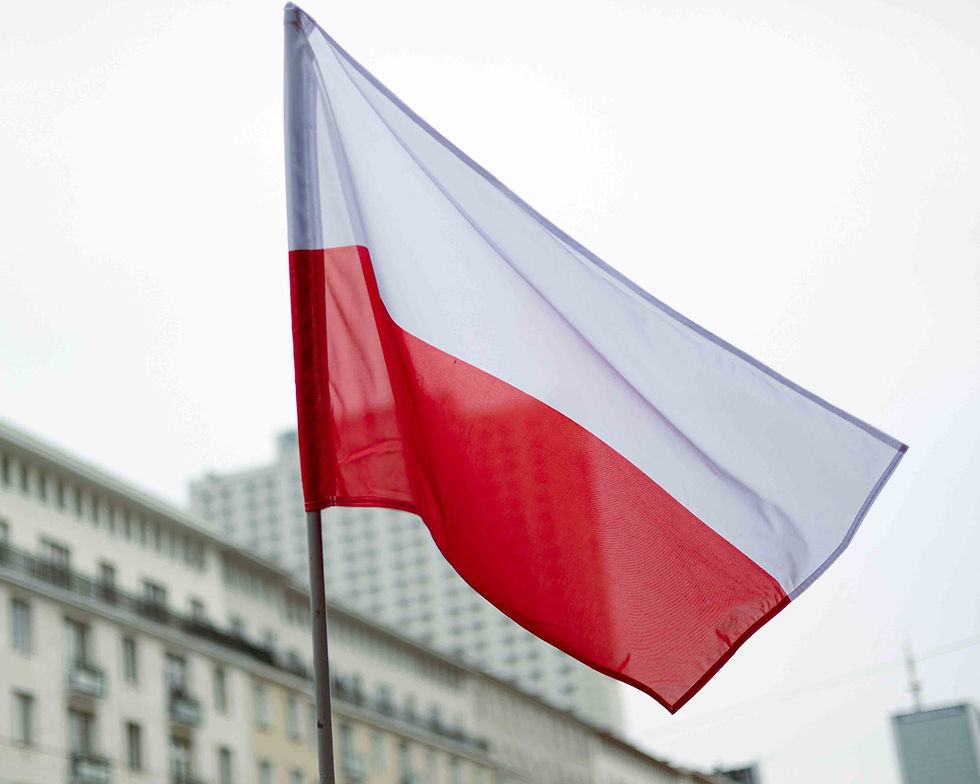
A professional overview of qualifications, hygiene, client safety, documentation, GDPR, taxation and responsible business practice
About the Author
Few professionals have witnessed the evolution of permanent makeup in Poland as closely as Agnieszka Adamczak. With more than 27 years of experience in permanent makeup, she has been part of the industry since its early development in the country, building a career that brings together hands-on practice, education, cosmetology and nursing.
Holding Master’s-level qualifications in Cosmetology and Nursing, Agnieszka is a permanent makeup artist, educator and founder of her own PMU Training Academy and Salon Visage. For more than a decade, she has also trained other professionals, with a particular focus on advanced PMU techniques, safety and responsible professional practice.
Her career extends well beyond the treatment room and classroom. Agnieszka is a Polish Champion in Permanent Makeup, an iColor International Trainer and the official distributor of iColor pigments in Poland. She has participated in PMU championships and professional events in Poland and internationally as a judge, speaker, sponsor and certified trainer, and is the author of numerous publications dedicated to permanent makeup and the beauty industry.
After nearly three decades in the profession, her perspective on permanent makeup goes beyond technique alone. For Agnieszka, professional practice also means understanding the responsibilities that surround every procedure — from hygiene and pigment safety to documentation, client protection and the legal framework within which an artist works.
In this article for PULSE PMU, Agnieszka turns her attention to Poland and explores what PMU professionals should understand about building a responsible practice — where artistic skill is supported by professional standards, safety and legal awareness.

Permanent makeup has evolved far beyond a beauty trend. Today, it is a specialised professional field combining aesthetics, precision, colour theory, knowledge of the skin and a high level of responsibility for client safety.
As the PMU industry continues to grow in Poland, so do client expectations. A client choosing a permanent makeup artist is no longer looking solely for a beautiful result. Increasingly, clients want to know who is performing the procedure, what training the artist has completed, which pigments are being used, how hygiene is maintained, how their personal information is handled, and how seriously the practitioner approaches safety.
Legal compliance should therefore not be viewed simply as an administrative burden standing between an artist and a creative career.
It is part of the foundation of a responsible professional practice.
For an artist planning a long-term career in Poland, understanding the legal and organisational framework surrounding permanent makeup is just as important as developing technical competence.
Is a Licence Required to Perform Permanent Makeup in Poland?
One of the first questions asked by artists entering the Polish PMU industry concerns licensing.
Poland does not currently operate a separate state professional licensing system specifically for permanent makeup artists comparable to the licensing systems applicable to certain regulated professions.
Permanent makeup is nevertheless subject to a broader framework of rules governing business activity, consumer protection, hygiene and infection prevention, chemical safety, personal data and other areas.
The absence of a dedicated PMU licence should therefore never be interpreted as the absence of professional or legal responsibility.
Permanent makeup involves introducing pigment through the skin barrier. Appropriate knowledge, preparation and hygienic practice are consequently essential.
A competent practitioner should understand areas including:
skin structure and its relevance to permanent makeup;
the expected skin response and recovery process following a PMU procedure;
colour theory and pigment behaviour;
factors that may require a procedure to be postponed or refused;
hygiene and infection prevention;
disinfection and sterilisation where applicable;
client consultation and documentation;
possible adverse reactions and situations that fall outside the practitioner's professional competence;
professional responsibility.
It is also important to distinguish between a private training certificate and a state-issued professional authorisation.
A PMU academy may issue a certificate confirming completion of its training programme. Such a certificate may demonstrate education or completion of a particular course, but it should not be represented as a government licence or statutory professional authorisation when it is not one.
Professional education therefore remains extremely important even where legislation does not establish a dedicated PMU licensing pathway.
Establishing a PMU Business in Poland
Permanent makeup falls within the broader framework governing economic activity in Poland.
For registered beauty businesses, one commonly used structure is a sole proprietorship (jednoosobowa działalność gospodarcza) registered through the Central Register and Information on Economic Activity — CEIDG.
Under Poland's PKD 2025 classification, permanent makeup (makijaż permanentny) is expressly included within PKD 96.22.Z — Działalność w zakresie pielęgnacji urody i pozostała działalność kosmetyczna (beauty care and other cosmetic activities).
However, not every small-scale activity necessarily requires immediate CEIDG registration.
Polish law also provides for działalność nierejestrowana — non-registered small-scale activity — where all statutory conditions are met. From 2026, the revenue limit is calculated quarterly and is set at 225% of the minimum monthly wage; for 2026, this amounts to PLN 10,813.50 per quarter. Eligibility also depends on additional statutory conditions, including the individual's previous business activity and, for foreign nationals, whether their residence or legal status allows them to use this form of activity.
If the quarterly revenue limit is exceeded, the activity becomes a registered business from the day on which the limit is exceeded, and an application for entry in CEIDG must generally be submitted within seven days.
Importantly, operating without CEIDG registration does not automatically remove other obligations that may apply to the activity.
Depending on the circumstances, a PMU practitioner may still need to consider:
taxation;
sales records;
VAT rules;
fiscal cash-register requirements;
consumer rights;
sanitary and infection-prevention requirements;
personal-data protection;
product compliance.
For this reason, the appropriate business and tax structure should be assessed individually rather than copied from another practitioner.
Foreign PMU Artists Working in Poland
Foreign nationals planning to provide permanent makeup services in Poland should not assume that the rules governing business registration are identical for everyone. The ability to establish a business or use działalność nierejestrowana may depend on nationality, residence status and the legal basis of stay in Poland. EU/EEA nationals and certain categories of non-EU nationals may have different rights to conduct economic activity. Foreign practitioners should therefore verify both their immigration status and their right to conduct the relevant form of business activity before accepting clients.
Hygiene and Sanitary Requirements
Hygiene is one of the most important areas of responsibility in permanent makeup.
PMU procedures involve a breach of tissue continuity, creating a potential route for infection when appropriate precautions are not followed.
Under Article 16 of Poland's Act on Preventing and Combating Infections and Infectious Diseases in Humans, persons other than those providing healthcare services who perform activities involving a breach of tissue continuity must implement and follow procedures designed to protect against infections and infectious diseases. These procedures should cover, in particular, the manner in which tissue-disrupting activities are performed, the use and sterilisation of reusable equipment where applicable, skin and mucous-membrane disinfection, and the decontamination of premises and equipment.
In practical terms, a PMU studio should therefore have an appropriate hygiene system covering areas such as:
hand hygiene;
appropriate glove use;
single-use materials where applicable;
skin preparation and disinfection;
cleaning and disinfection of surfaces and equipment;
safe handling of needles and other sharps;
appropriate waste management;
prevention of cross-contamination;
organisation of the procedure area;
sterilisation of reusable instruments where required;
appropriate storage and handling of sterile materials.
The exact requirements applicable to a particular studio may depend on the procedures performed, equipment used and organisation of the premises.
The competent State District Sanitary Inspector (Państwowy Powiatowy Inspektor Sanitarny) may, at the operator's request, provide an opinion on the infection-prevention procedures prepared for activities involving a breach of tissue continuity.
Hygiene is therefore not simply about whether a studio looks clean. Hygiene is a system. Written procedures should correspond to the way work is actually performed rather than exist solely for inspection purposes.
Pigments Are Part of Professional Responsibility
Pigment selection is another area where professional and legal responsibilities intersect.
Tattoo and permanent-makeup mixtures placed on the market or used for tattooing purposes within the European Union are subject to chemical restrictions established under the EU REACH Regulation, including the restriction introduced by Commission Regulation (EU) 2020/2081 on substances in tattoo inks and permanent makeup.
These rules restrict concentrations of numerous substances and impose specific labelling requirements.
Among other requirements, mixtures intended for tattooing or permanent makeup must carry the required statement identifying their intended use, a unique batch reference number and a list of ingredients in accordance with the applicable REACH requirements. Under the REACH restriction, a mixture that does not bear the required statement identifying it for tattoo or permanent-makeup use must not be used for tattooing purposes.
A professional PMU practitioner should therefore consider:
the manufacturer and supplier;
the product's intended use;
appropriate EU-market labelling;
batch identification;
ingredient information;
instructions and supporting product documentation;
compliance with applicable EU requirements.
In addition to checking the product's required REACH labelling and batch identification, practitioners should maintain procedure records that allow the pigment and batch used for each client to be identified. This provides practical traceability in the event of an adverse reaction, complaint, recall or product-safety investigation.
Consultation as a Professional Standard
A professional consultation should be more than a discussion about brow shape or lip colour. It is part of the safety process. Its purpose is to establish whether the requested procedure is appropriate within the practitioner's professional competence and whether there are circumstances that require the procedure to be postponed or refused, or the client to seek advice from an appropriately qualified professional.
Depending on the procedure and circumstances, documentation may include:
information necessary to provide the service;
relevant information that may affect whether or how the procedure can be performed, including allergies or medication where appropriate;
treatment details;
acknowledgement or consent relating to the procedure;
aftercare information;
details of products and pigments used;
photographic documentation where appropriate.
However, more documentation is not automatically better documentation. Information collected should be relevant and proportionate to the purpose for which it is required.
PMU practitioners should remain within the boundaries of their professional competence and should not diagnose health conditions or provide advice reserved for healthcare professionals. Where a health-related concern falls outside the practitioner's professional scope, the client should be advised to seek guidance from an appropriately qualified professional.
Informed Consent: More Than a Signature
Client consent is an important component of responsible professional practice, but a signature should never be interpreted as a universal waiver of responsibility. A client should receive understandable information about the nature of the procedure, foreseeable risks and reactions, expected healing, aftercare and relevant limitations concerning the outcome.
Documentation can demonstrate that this information was provided and acknowledged, but it does not excuse negligent practice, inappropriate hygiene or failure to comply with applicable law.
Likewise, a practitioner should be prepared to postpone or refuse a procedure where proceeding would be inappropriate. Being able to say "no" is sometimes one of the clearest signs of professionalism.
GDPR and Client Data in the PMU Studio
A modern PMU business processes considerably more than appointment information. Names, telephone numbers, email addresses, photographs and treatment histories may constitute personal data. Consultation forms create an additional layer of responsibility because information about health conditions, medication, allergies or other health-related circumstances may constitute data concerning health, which belongs to the special categories of personal data protected by Article 9 of the General Data Protection Regulation (GDPR).
A practitioner collecting such information therefore needs to determine why the information is necessary and the appropriate legal basis for processing it. A professional studio should be able to answer several key questions:
What information am I collecting, and why?
What is the lawful basis for processing it?
If special-category data are involved, what Article 9 condition permits their processing?
Who can access the information, and how securely is it stored?
How long will it be retained?
How can the client's data-protection rights be exercised?
Practitioners should not assume that a general GDPR consent clause automatically provides a valid legal basis for every type of processing. Where explicit consent is relied upon for special-category data, it must meet the requirements of the GDPR, and other potentially applicable legal bases should be assessed according to the circumstances. Collecting health information simply because a questionnaire template contains a long list of health-related questions is not, by itself, a sound data-protection strategy; the principles of purpose limitation and data minimisation should be considered when designing consultation documentation.
Before-and-After Photographs and Marketing
Photography is one of the most important marketing tools in permanent makeup. However, performing a PMU procedure does not automatically give the practitioner unrestricted permission to publish identifiable photographs of the client. Procedure documentation and marketing should be treated as separate purposes.
A studio should distinguish between:
consent or agreement relating to the procedure;
processing necessary to provide and document the service;
processing of health-related information;
marketing communications;
publication of identifiable photographs or other content.
Where images are used publicly, practitioners should consider both GDPR requirements and applicable Polish rules concerning a person's image (wizerunek). Permission to take or retain a photograph for procedure documentation should therefore be distinguished from permission to publish that image on a website, social-media account, advertising material or other public channel. A single broad clause covering "the procedure, GDPR and social media" may therefore be inappropriate.
Taxation and Financial Responsibilities
Financial compliance is another important part of operating a PMU business. Depending on the practitioner's legal status and circumstances, relevant obligations can include:
income taxation;
social-security and health-related contributions;
VAT;
accounting and record keeping;
fiscal cash-register requirements;
documentation of sales.
Particular attention should be paid to cash-register rules. Polish tax rules exclude certain categories of services, including cosmetic and cosmetology services, from the general exemptions from recording sales through a fiscal cash register. As permanent makeup falls within the broader category of beauty and cosmetic activities, PMU practitioners should verify the cash-register rules applicable to the specific services they provide before accepting clients. These rules may also apply when the practitioner operates as działalność nierejestrowana; the small scale of the activity does not by itself create an exemption.
VAT treatment and social-security obligations, meanwhile, depend on factors including the form and scale of the activity, and tax rules may change over time. For example, from 2026 Poland increased the general annual sales threshold for the VAT small-business exemption to PLN 240,000. The exemption is subject to statutory conditions and exclusions, so the threshold alone should not be treated as confirmation that a particular PMU business qualifies for VAT exemption.
Rather than relying on figures found in old social-media posts, practitioners should verify current requirements through official Polish sources or obtain advice from a qualified accountant.
Professional Liability Insurance
Professional liability insurance is an important risk-management tool for PMU practitioners. For a standard non-medical permanent makeup business, there is no general statutory requirement equivalent to the compulsory professional liability insurance imposed on certain regulated professions. Nevertheless, appropriate liability insurance is strongly advisable.
Insurance does not replace training, hygiene, careful client selection or compliance with applicable law, but it can provide financial protection where the relevant event falls within the policy's coverage. The central question is therefore not simply "Do I have insurance?" but rather "Does this policy actually cover the procedures I perform?"
A practitioner should review the scope of cover, exclusions, limits, territorial restrictions and any requirements imposed by the insurer. The fact that a policy is marketed to the beauty industry does not necessarily mean that every permanent-makeup procedure is covered.
The Most Common Mistakes Made by New PMU Artists
"I will start working first and deal with the paperwork later."
Even where an activity may legally qualify for Poland's non-registered activity regime, tax, fiscal, sanitary, consumer-protection and data-protection obligations may still apply. The appropriate legal position should therefore be established before accepting clients.
"I have a certificate, so I am legally covered."
A training certificate may demonstrate completion of a course, but it does not replace applicable business, sanitary, tax, consumer-protection or data-protection obligations.
"I found a consent form online."
Documentation copied from another studio may not reflect the procedures actually performed, the information collected or the legal basis for processing that information.
"The client signed the form, so I am protected."
A client's signature does not remove the practitioner's responsibility to perform the service with appropriate care or to comply with applicable law.
"This pigment is popular, so it must be compliant."
Popularity is not evidence of regulatory compliance. The product's intended use, labelling, traceability and compliance with applicable REACH requirements should be verified.
"The client agreed to photos, so I can use them anywhere."
Not necessarily. The purpose and scope of the permission matter, and consent to procedure documentation should not automatically be treated as permission for unrestricted marketing use.
"Hygiene is obvious."
Professional hygiene should not depend on personal interpretation. Where tissue continuity is breached, Polish law requires appropriate infection-prevention procedures.
Legal Compliance as Part of a Professional Brand
The PMU industry is becoming increasingly competitive. Technical skill remains fundamental, but professionalism is also reflected in the systems and decisions surrounding every procedure — from the quality of the consultation and the ability to refuse an unsuitable treatment to pigment traceability, infection-prevention practices, accurate documentation, responsible communication of risks and the protection of client data. It also means recognising when an issue falls outside the practitioner's professional competence and should be referred to an appropriately qualified healthcare, legal, tax or other relevant professional.
Together, these elements build trust — and trust is one of the most valuable assets a PMU business can have.
A Professional PMU Readiness Audit
Before accepting clients, practitioners can use the following checklist to review the key elements of professional readiness.
Business and Legal Structure
Do I need CEIDG registration, or do I legally qualify for another form of activity, and am I using the appropriate PKD classification where registration is required?
Have I checked the tax treatment applicable to my situation, including VAT obligations?
Have I reviewed ZUS and health-contribution obligations where applicable?
Have I verified the fiscal cash-register rules applicable to the specific PMU services I provide, including whether an exemption is available?
Premises and Safety
Have the required infection-prevention procedures been implemented, and is the procedure area organised to minimise contamination?
Are needles and sharps handled safely, and is waste managed in accordance with the rules applicable to the waste actually generated?
Are reusable instruments appropriately decontaminated and sterilised where applicable?
Can the pigments and relevant batches used for each procedure be traced?
Client Documentation
Does the consultation collect only information relevant to the procedure, and is the client appropriately informed about the procedure and foreseeable risks?
Are aftercare instructions provided and relevant procedure details recorded?
Can the pigment and batch used for a particular procedure be identified?
GDPR and Marketing
Is the client given appropriate privacy information, and is there a lawful basis for each category of personal data being processed?
If health data are processed, has the applicable Article 9 GDPR condition been identified?
Are records securely stored and appropriate retention periods defined?
Are procedure documentation and marketing treated as separate purposes?
Is there an appropriate basis for publishing identifiable client photographs?
Professional Responsibility
Has the practitioner received appropriate education and practical training, and do they understand the factors that may require a procedure to be postponed or refused, as well as the limits of their professional competence?
Does the practitioner know when to postpone or refuse a procedure, or refer an issue to an appropriate professional?
Does any professional liability policy actually cover the PMU procedures performed?
Is professional knowledge regularly updated?
Professionalism Begins Where Improvisation Ends
Building a sustainable PMU career requires considerably more than mastering technique. An artist may have exceptional colour intuition, a beautiful hand and an impressive portfolio, yet still operate without the systems required to protect both clients and the business.
The strongest professionals understand that technical excellence and professional responsibility are inseparable. A beautiful result matters, but so do the decisions made before the needle touches the skin: the quality of the consultation, the safety of the procedure, the pigments being used, the hygiene system supporting the procedure, accurate documentation, the protection of personal data, appropriate aftercare and, importantly, the ability to recognise the limits of one's professional competence.
Ultimately, legal compliance is not the enemy of creativity. It is part of what allows creativity to become a sustainable profession. For PMU artists working in Poland, professionalism is therefore not simply about avoiding regulatory problems; it is about building a practice that clients can trust and a career capable of developing responsibly over time.
Explore PMU Regulations Around the World
Permanent makeup regulations vary significantly from country to country. PULSE PMU continues to explore how PMU artists can work legally and professionally in different markets. Read our guides to working as a PMU artist in Germany: "Working as a PMU Artist in Germany: Legal Compliance, Hygiene, and Professional Qualifications", permanent makeup licensing requirements in the United States: "How to Legally Work as a Permanent Makeup Artist in the United States: Licenses, Requirements, and Permits", and the path to professional PMU licensing in Dubai: "Legalizing a Permanent Makeup Artist in Dubai: The Real Journey from Training to a DHA License".
Disclaimer
This article is intended for general educational and informational purposes and reflects the Polish and EU regulatory framework reviewed at the time of publication. It does not constitute legal, tax, accounting, insurance or medical advice.
Requirements may vary depending on the services provided, business model, premises, products used and individual circumstances. Regulations may also change over time. PMU professionals should verify current requirements through official Polish and EU sources and, where appropriate, consult the competent authorities or qualified legal, accounting, data-protection or insurance professionals.
#PermanentMakeupPoland #PMUPoland #PermanentMakeupRegulationsPoland #PermanentMakeupLawsPoland #PermanentMakeupLicensePoland #PMULegalRequirements #PMUArtistPoland #PermanentMakeupArtistPoland #PMUBusinessPoland #PermanentMakeupBusiness #PKD9622Z #CEIDG #DzialalnoscNierejestrowana #PMUHygiene #PMUSafety #REACHPermanentMakeup #GDPRforPMUArtists #PermanentMakeupPigments #PMUProfessionalStandards #BeautyBusinessPoland
Publication date: September 9, 2026
By Agnieszka Adamczak


Comments