


Zara Yuldasheva: “Permanent Makeup Doesn't Begin with a Machine. It Begins with Responsibility.”
Over the past several years, the permanent makeup industry has transformed beyond recognition. New devices, pigments, techniques, and bold promises continue to flood the market. Social media has made the profession more accessible than ever before, but it has also created the illusion that an artist's skill can be judged by a single striking photo taken immediately after a procedure. Against this backdrop, professionals who build their reputation not on trends, but on consistently outstanding results, ethical practice, and years of experience have become especially valuable.
Zara Yuldasheva is one of those professionals. Over 26 years in the industry, she has evolved from a practicing artist into the founder of Studio 14 in Tashkent, an international trainer, speaker, and organizer of professional educational projects. Yet after speaking with her, one quickly realizes that none of these titles defines her most. Zara rarely talks about awards or accomplishments. Instead, she speaks about trust, responsibility, lifelong learning, and respect for the profession.
Her philosophy is not driven by the pursuit of every new trend. On the contrary, she believes that a true professional must approach every innovation with critical thinking, remain committed to continuous education, and never lose sight of one fundamental truth: the real test of an artist's work begins not immediately after the procedure, but months later, when the results have fully healed.
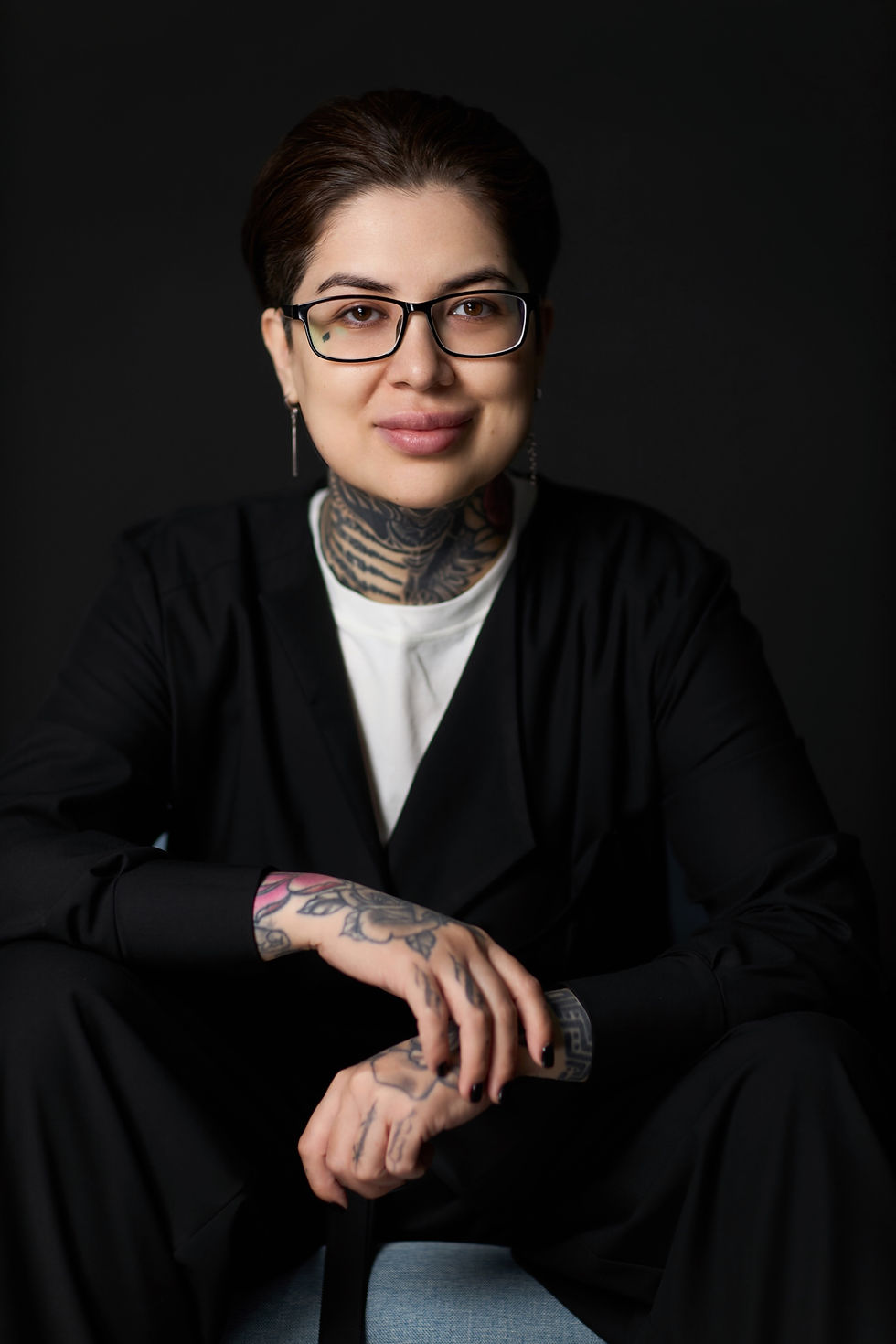
Today, Zara is actively involved in educating professionals, speaking at international conferences, participating in industry initiatives, and exploring promising approaches to skin restoration following aesthetic procedures. Yet despite her extensive experience, she still considers herself a lifelong student of her profession. Perhaps that is precisely what sets apart those who remain respected and in demand even after decades in the industry.
We spoke with Zara about how the permanent makeup industry has evolved over the past quarter-century, what truly defines quality in permanent makeup today, why signature techniques emerge not from a desire to stand out but from the pursuit of better solutions, and how she envisions the future of the profession.
PULSE PMU: Zara, today you're recognized as a highly experienced permanent makeup artist, an international trainer, a speaker, and the founder of your own studio. But if someone asked you who Zara Yuldasheva is today, how would you answer?
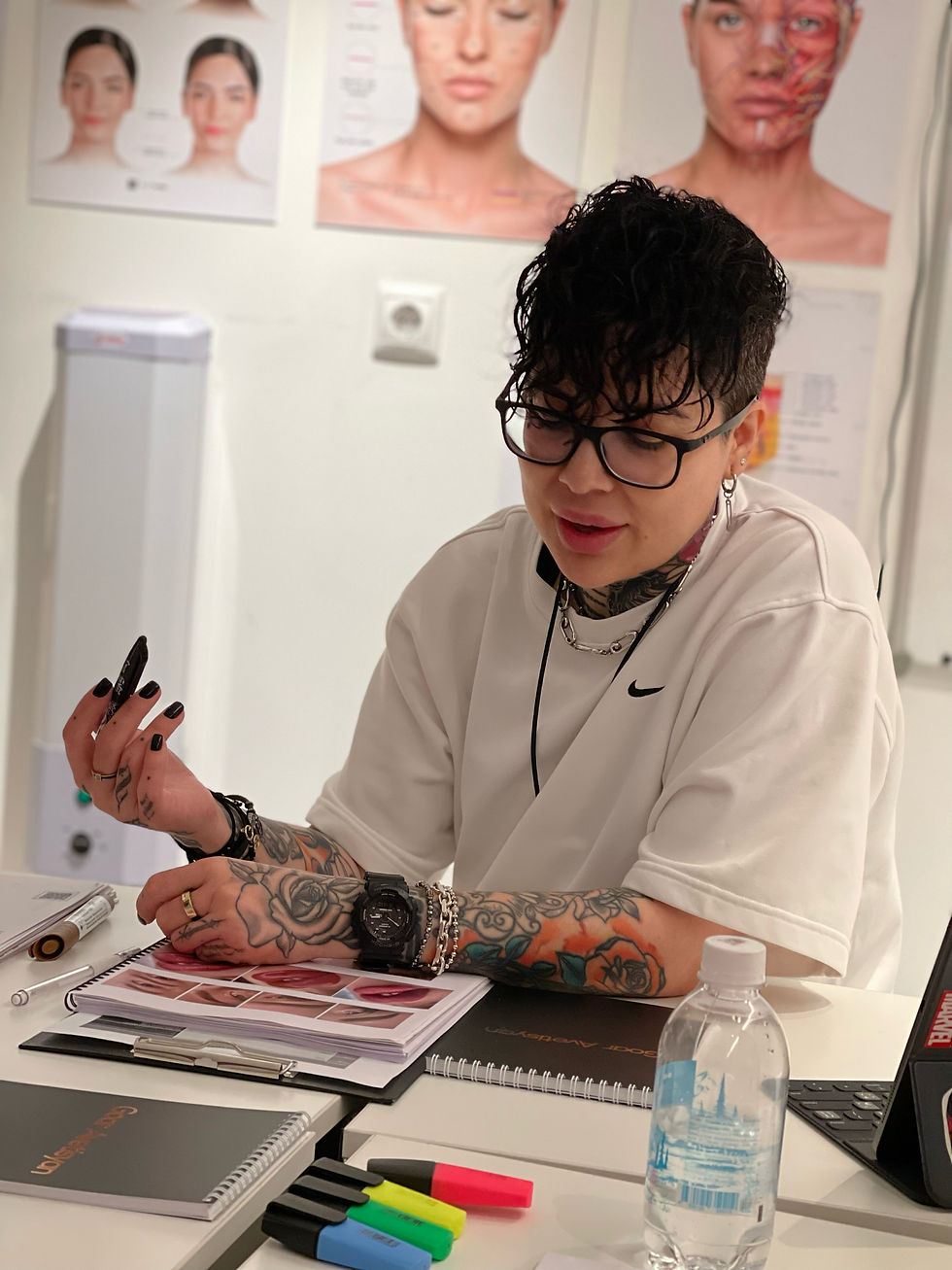
If we focus on the facts, today I am indeed known as a permanent makeup artist with 26 years of experience, an international trainer, a speaker, and the founder of Studio 14. I train professionals at every stage of their careers—from their very first steps in the industry to advanced practice. I speak at international conferences, participate in educational initiatives, and strive to bring together professionals from different countries. But honestly, none of that has ever been my ultimate goal. Titles and recognition are the result of the work—not its purpose. My true goal has always remained the same: to perform every procedure with such quality, safety, and professionalism that my clients never have to rely on beautiful promises to trust me. Trust can only be earned through results. If you take away the titles, the stages, the awards, and the certificates, what remains is the most important part: I still consider myself a student of my profession. That mindset is what keeps me moving forward. Every new day is an opportunity to learn something new, to see familiar things from a different perspective, and to become just a little better than I was yesterday.
PULSE PMU: You entered the profession at a time when the permanent makeup industry looked completely different. When you think back to those early years, what stands out most in your memory?
Probably the fact that, back then, no one could give us ready-made answers. There were no online schools, no detailed step-by-step protocols, and no endless selection of masterclasses. We learned primarily through our own hands-on experience. Every mistake cost us time, and every improvement had to be earned through practice. Over the past twenty-six years, the profession has changed dramatically. We now have advanced devices, new generations of pigments, and entirely new techniques and materials. Today, there is so much information available that it can seem as though anyone can master the profession in just a few weeks. But I firmly believe there is one principle that will never change: a professional stops growing the moment they decide they already know enough. That is why I continue to attend international congresses, study emerging technologies, collaborate with manufacturers of equipment and materials, test new products, and search for solutions that can genuinely move our profession forward. As long as you remain eager to learn, you continue to grow. The moment you become convinced that you already know everything, professional stagnation begins.
PULSE PMU: Today, many people judge a permanent makeup artist's work by a photo taken immediately after the procedure. You don't agree with that approach. Why?

Because a beautiful photo taken immediately after the procedure is not necessarily a sign of true professionalism. The real test begins much later.
A month later. Six months later. A year later.
I constantly remind my students of one simple principle: an artist's work should not be judged on the first day—it should be judged by time. High-quality permanent makeup is not just about achieving a beautiful color immediately after the procedure. It is about a pigment that ages gracefully, a shape that remains timeless for years, minimal tissue trauma, predictable healing, procedural safety, and respect for the client's natural anatomy. These are the details that define true quality. Everything else is, to a large extent, a matter of marketing and attractive presentation.
PULSE PMU: You've devoted a significant part of your professional career to education. Why has teaching become such an important part of your journey?

Because education truly changes people's lives. Over the years of teaching, I have witnessed that transformation hundreds of times. Very often, a student comes to me lacking confidence. They are afraid to pick up the machine, doubt their abilities, and second-guess every movement. Then, just a few months later, they open their own studio, begin earning a достойный living, support their family, and suddenly realize they are capable of far more than they ever imagined. Those are the moments that make teaching so meaningful to me. But my goal has never been simply to teach a particular technique. Techniques evolve over time. What matters far more is teaching people how to think.
I teach my students to understand the skin. To understand color. To understand the healing process. To understand the consequences of every decision they make.
I have no desire for my students to become copies of me. Quite the opposite—I want each of them to grow into an independent professional who earns respect for their own expertise, not because they imitate someone else's style.
PULSE PMU: You have developed your own signature techniques. Today, many artists aspire to create a technique they can call their own. What does a signature technique mean to you?

I believe that today the very idea of a signature technique is often misunderstood. Many people see it as a way to stand out or come up with a catchy name. For me, it's something entirely different. A signature technique is born when you encounter a challenge that doesn't yet have a ready-made solution. It is always about finding a better answer—not about attracting attention. Every technique I have developed emerged not because I wanted to put my name on it, but because it was shaped by thousands of procedures, careful analysis of my own mistakes, continuous observation of the healing process, and a constant desire to make the results even more refined, natural, and predictable. I have never been inspired by work that impresses only on the day of the procedure. What interests me far more is creating results that remain just as harmonious years later as they were once fully healed. Perhaps the greatest compliment an artist can receive is when people don't ask, "Who did your permanent makeup?" Instead, they ask, "Why do you always look so naturally beautiful?" That is the kind of result worth searching for.
PULSE PMU: How do you assess the current state of the permanent makeup industry? What encourages you today, and what concerns you the most?
We are living in a fascinating time. Never before has the permanent makeup industry evolved at such a rapid pace. Almost every month brings new devices, pigments, cartridges, materials, and technologies. It creates tremendous opportunities for professional growth. At the same time, however, it presents a new challenge. While the amount of information continues to grow, a deep understanding of the underlying processes does not always keep pace. Today, it's relatively easy to build an attractive Instagram profile. But trust cannot be bought, designed, or measured by the number of followers. A true professional is defined not by popularity, but by the quality of their decisions. Every time we choose a device, select a pigment, or recommend a particular technique to a client, we take responsibility for the outcome. That is why critical thinking has become just as important as technical skill. I firmly believe that the future of our profession belongs to those who can successfully combine aesthetics, science, safety, and a lifelong commitment to continuous learning.
PULSE PMU: In recent years, you've become increasingly focused on skin restoration following aesthetic procedures. What has drawn you to this area, and why has it become such an important part of your work?
Because I am convinced that the next stage in the evolution of permanent makeup is no longer defined solely by the technique itself. We spend a great deal of time discussing pigments, equipment, and implantation depth, yet far less attention is given to helping the skin recover in the most natural and physiological way. And in reality, the quality of tissue regeneration plays a crucial role in the final result. Today, I am involved in the development of professional products designed to support tissue recovery after aesthetic procedures. This work is especially meaningful to me because I have always been drawn not to attractive marketing claims, but to solutions that genuinely improve outcomes. I firmly believe that regenerative approaches will become the new standard in aesthetic medicine and permanent makeup over the coming years. And if I have the opportunity to help shape that future, I want to be among those creating the next generation of solutions—not simply watching them emerge.
PULSE PMU: You regularly take part in international projects and conferences. On a personal level, what do these experiences give you?

Perhaps the greatest value is the opportunity to continually expand my own professional horizons. You can become a well-known artist in your city. You can earn recognition throughout your country. But that doesn't mean you've seen the industry as a whole. Every country has its own approach. Some place greater emphasis on safety, others introduce innovative technical solutions, while others have developed unique educational systems. That is why international projects have never been about status for me—they have always been about growth. When professionals freely exchange knowledge and experience, expertise is no longer limited by borders. In the end, the entire profession benefits—and so do our clients.
PULSE PMU: Looking back on your career, what do you consider your greatest professional achievement?

My answer will probably surprise a lot of people.
It is certainly not diplomas. Not trophies. Not titles. Not speaking on stage. Not even numbers on social media. My greatest achievement is trust.
When a client comes back to you years later. When a former student says, "Thank you. You changed my life." When you're invited to speak not because you're well known, but because your colleagues genuinely trust your knowledge and judgment. That kind of reputation cannot be bought. It cannot be manufactured. It is built over years—and every single day, it is tested again by time.
PULSE PMU: Finally, what message would you like to share with professionals who are just beginning their journey in permanent makeup?
I would encourage them not to chase popularity, but to strive to become true professionals. There is no magic technique that will solve every challenge. Don't try to blindly follow someone else's path, because real success is always deeply personal. Invest in knowledge above all else. Learn to understand the reasons behind every decision, not just repeat the steps. Never be afraid to ask difficult questions. Never be afraid to admit your own mistakes. The only thing worth fearing is the moment you stop growing. That is when a professional begins to fall behind. A respected name in this profession is not built through viral videos or beautiful photographs. It is earned through thousands of procedures. Thousands of hours of dedicated practice.
#ZaraYuldasheva #PermanentMakeup #PMU #PermanentMakeupArtist #PMUEducation #PMUTrainer #PMUInterview #Studio14 #BeautyIndustry #AestheticMedicine #Micropigmentation #PMUProfessionals #PulsePMU #ProfessionalEducation #PermanentMakeupTraining
Publication date: July 01, 2026
By Sergey Yakovlev


Comments